Your Cart


Product title goes here
$19.95
Thank you! Your submission has been received!
Oops! Something went wrong while submitting the form.
Registering 2 or more people for a First Aid course?
Get Group Discount CodesNo items found.

Personal trainers and fitness instructors in Peel region, Ontario, must be prepared for emergencies, accidents, and illnesses during training sessions. This list outlines common scenarios they may encounter, including musculoskeletal injuries, heat exhaustion, cardiovascular emergencies, and allergic reactions. By understanding and addressing these situations, trainers can ensure client safety and well-being.
Personal trainers and health and fitness instructors must be prepared for a range of potential emergencies, accidents, illnesses, and injuries that may arise during training sessions.
Based on comprehensive research and industry reports, this compiled list highlights the most frequently encountered scenarios faced by personal trainers in the Peel region of Ontario.
By understanding and addressing these situations, personal trainers and fitness instructors can ensure the safety and well-being of their clients, providing the necessary care and support when it matters the most.
From musculoskeletal injuries to heat exhaustion and cardiovascular emergencies to allergic reactions, this list aims to equip personal trainers with the knowledge and confidence needed to handle any critical situation that may arise during their work.

It's important for personal trainers to have a comprehensive understanding of these potential emergencies, accidents, illnesses, and injuries to ensure the safety and well-being of their clients.
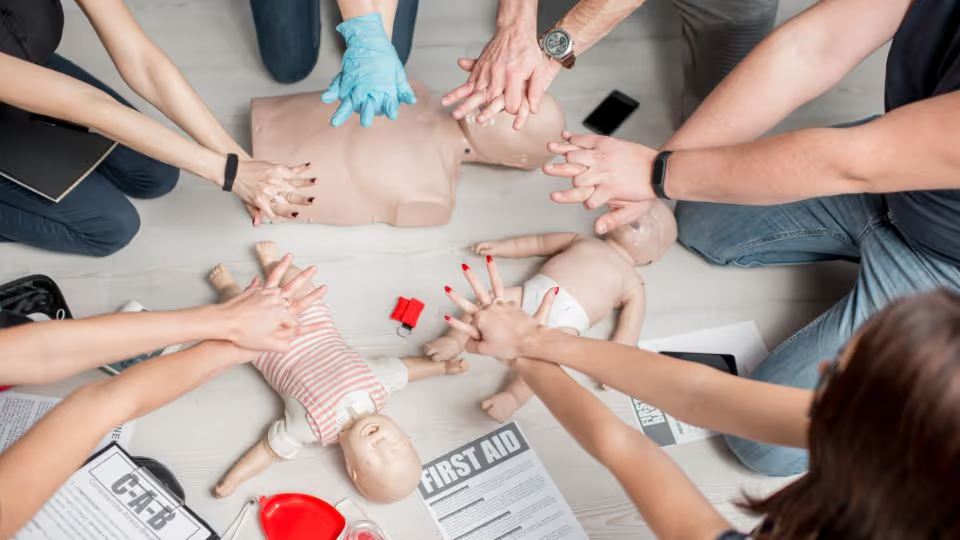
At Para CPR & First Aid, we are committed to providing top-notch training led by real paramedics. Our instructors bring real-life experience, utilizing the skills they teach in the field every day to save lives within our community. This hands-on expertise sets us apart from other providers and ensures you receive the most accurate and up-to-date instruction possible.
By choosing Para CPR & First Aid, you can trust that our courses will empower you to act confidently and correctly in case of an emergency, illness, or injury. We offer a range of courses in Mississauga, Brampton, and Toronto to cater to the needs of everyday people, healthcare professionals, first responders, corporations, and non-profit organizations.
Our popular Blended Course uses a half-in-class, half-online blended learning model, combining self-paced online modules with engaging in-person training guided by real paramedics. This approach maximizes flexibility and convenience while providing hands-on practice to develop life-saving skills.
We go beyond basic first aid and CPR training, offering comprehensive courses such as Intermediate First Aid, tailored to cover various emergencies and injuries. Our certification includes training in AED administration, equipping you with the knowledge and skills to respond effectively in critical situations.
With personal trainers preferring our combination of online and in-class learning, you can be confident that our courses are engaging, practical, and effective. We offer discount packages, private courses, and tailored services catering to your needs.
Regarding your safety and the well-being of those around you, trust the expertise and dedication of Para CPR & First Aid. Join us and be prepared to make a life-saving difference. Contact us today to start your journey towards acquiring essential first aid and CPR skills.

Enhance your skills and be prepared for emergencies with Para's blended first aid & CPR program. Gain knowledge and confidence to handle various injuries and emergencies. Sign up now to ensure client safety and take your training to the next level!

Guaranteed Better than the “big box” providers:




![Here's what you need to know as a PSW about the upcoming HSCPOA Act [updated June 2024]](https://cdn.prod.website-files.com/69718d186e85d4af679baa0b/69718d186e85d4af679bb0cd_C-PERS~1.avif)