Your Cart


Product title goes here
$19.95
Thank you! Your submission has been received!
Oops! Something went wrong while submitting the form.
Registering 2 or more people for a First Aid course?
Get Group Discount CodesNo items found.
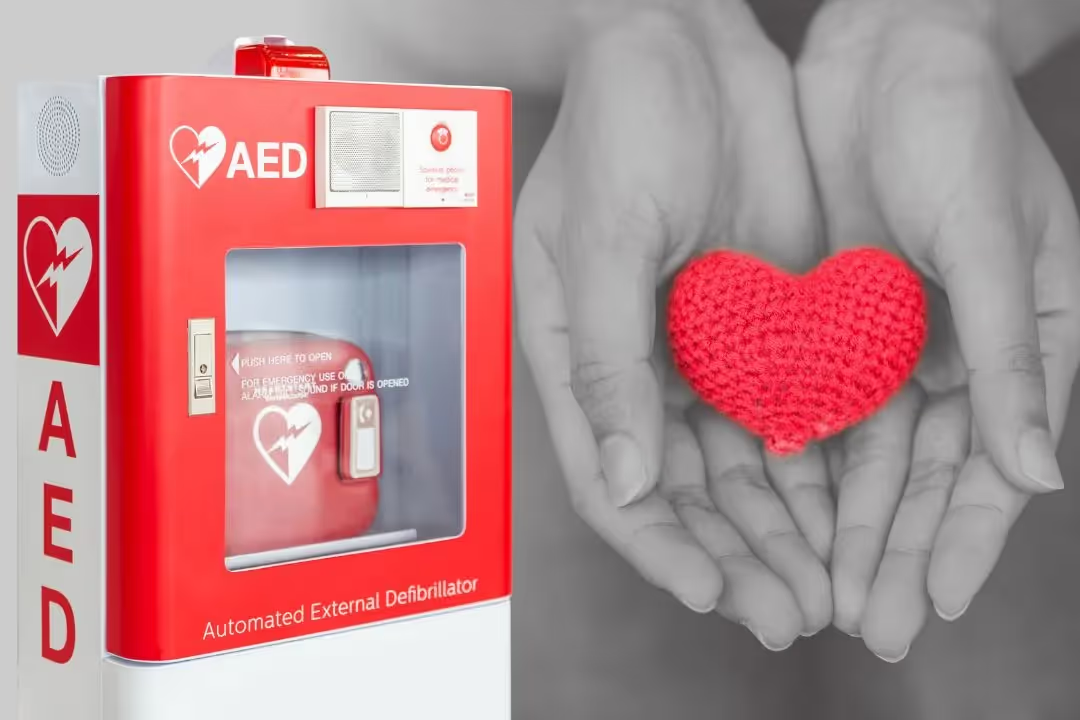
Automated External Defibrillators (AEDs) are a lifesaving tool. They enable everyday people & healthcare professionals alike to quickly administer powerful treatment in medical emergencies involving sudden cardiac arrest (when the heart stops beating), and significantly increase survival rates.
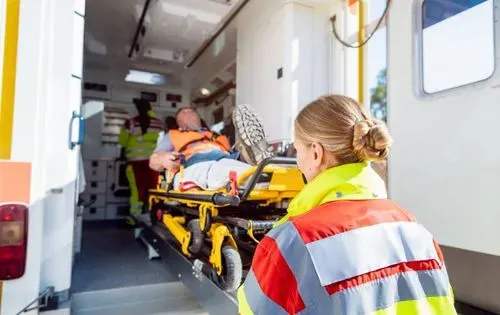
In the realm of emergency medical response, two key components stand out: Emergency Medical Services (EMS) and Automated External Defibrillators (AEDs).
While EMS undoubtedly plays a pivotal role in providing timely medical assistance, the importance of AEDs cannot be overstated. Despite the presence of EMS, AEDs serve as critical life saving devices in situations where every second counts. Let's delve into why AEDs are indispensable, even when EMS is available.
In medical emergencies like sudden cardiac arrest (SCA), every passing moment is precious. SCA strikes swiftly and unexpectedly, often leading to death within minutes if not treated promptly.
While EMS teams are trained to respond swiftly, they may not always arrive on scene in time, especially in densely populated areas or during peak demand periods.
AEDs bridge this crucial gap by providing immediate access to defibrillation, a vital intervention for restoring a normal heart rhythm. These devices are designed for ease of use by laypersons, enabling bystanders to initiate life-saving treatment before professional help arrives. In the critical minutes before EMS arrival, AEDs significantly increase the chances of survival.
The concept of the "Chain of Survival" underscores the sequential steps necessary for optimizing survival rates in cardiac emergencies.
AEDs form an integral link in this chain, alongside early recognition, prompt activation of EMS, and effective CPR. Each link builds upon the other, reinforcing the importance of rapid defibrillation.
By placing AEDs in accessible locations such as public buildings, schools, airports, sports facilities, and businesses enhance their ability to initiate early defibrillation. This decentralized approach ensures that life-saving interventions can begin within moments of a cardiac arrest, augmenting the overall effectiveness of emergency response systems.
One of the most compelling aspects of AEDs is their user-friendliness. These devices are designed to be intuitive, with audio and visual prompts guiding users through the defibrillation process.
Even individuals with minimal first aid and cpr training can effectively operate an AED, making them invaluable tools in emergencies where immediate action is paramount.
Moreover, AEDs are compact and portable, allowing for rapid deployment in various settings. Their widespread availability enhances community resilience, empowering bystanders to intervene effectively until professional help arrives. In scenarios where EMS response times may be prolonged, AEDs serve as a critical lifeline, increasing the likelihood of positive outcomes.
Rather than replacing EMS, AEDs complement their efforts by initiating essential treatment in the earliest stages of a medical crisis. EMS personnel often face logistical challenges and unpredictable response times, particularly in urban environments with heavy traffic congestion. AEDs serve as force multipliers, extending the reach of emergency care beyond traditional medical facilities.
Furthermore, AEDs contribute to public health initiatives aimed at improving survival rates from cardiac arrest. Community-based initiatives advocating for widespread AED placement and CPR training empower individuals to become active participants in saving lives. This collaborative approach fosters a culture of preparedness and responsiveness, strengthening the resilience of communities against medical emergencies.
While EMS plays a central role in delivering professional medical care, the complementary role of AEDs cannot be overlooked. These portable, user-friendly devices empower bystanders to initiate life-saving treatment in the critical minutes following a cardiac arrest. By augmenting the Chain of Survival and enhancing community resilience, AEDs contribute significantly to improved outcomes in medical emergencies.
In a world where every second counts, the presence of AEDs ensures that swift intervention is possible, even before EMS arrival. By embracing the importance of early defibrillation and fostering widespread access to AEDs, communities can bolster their capacity to save lives and safeguard the well-being of their residents.
The company we recommend to contact for anything AED related in Canada is AED.ca. They are Canada’s AED company and are experienced professionals. They truly care and are here to help. If you’re looking for a discount on an AED, contact us at firstaid@paramentors.ca for discounted rates!
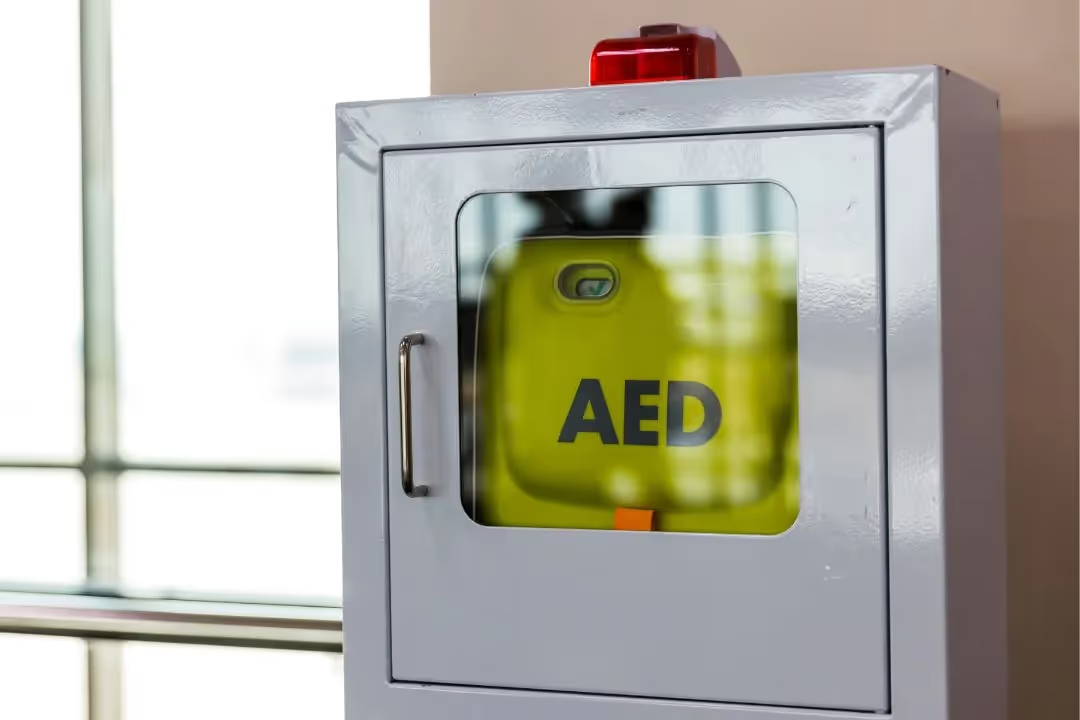
Connect with AED.ca, the most reputable and experienced provider of AED supplies in Canada.

Guaranteed Better than the “big box” providers:




![Here's what you need to know as a PSW about the upcoming HSCPOA Act [updated June 2024]](https://cdn.prod.website-files.com/69718d186e85d4af679baa0b/69718d186e85d4af679bb0cd_C-PERS~1.avif)